
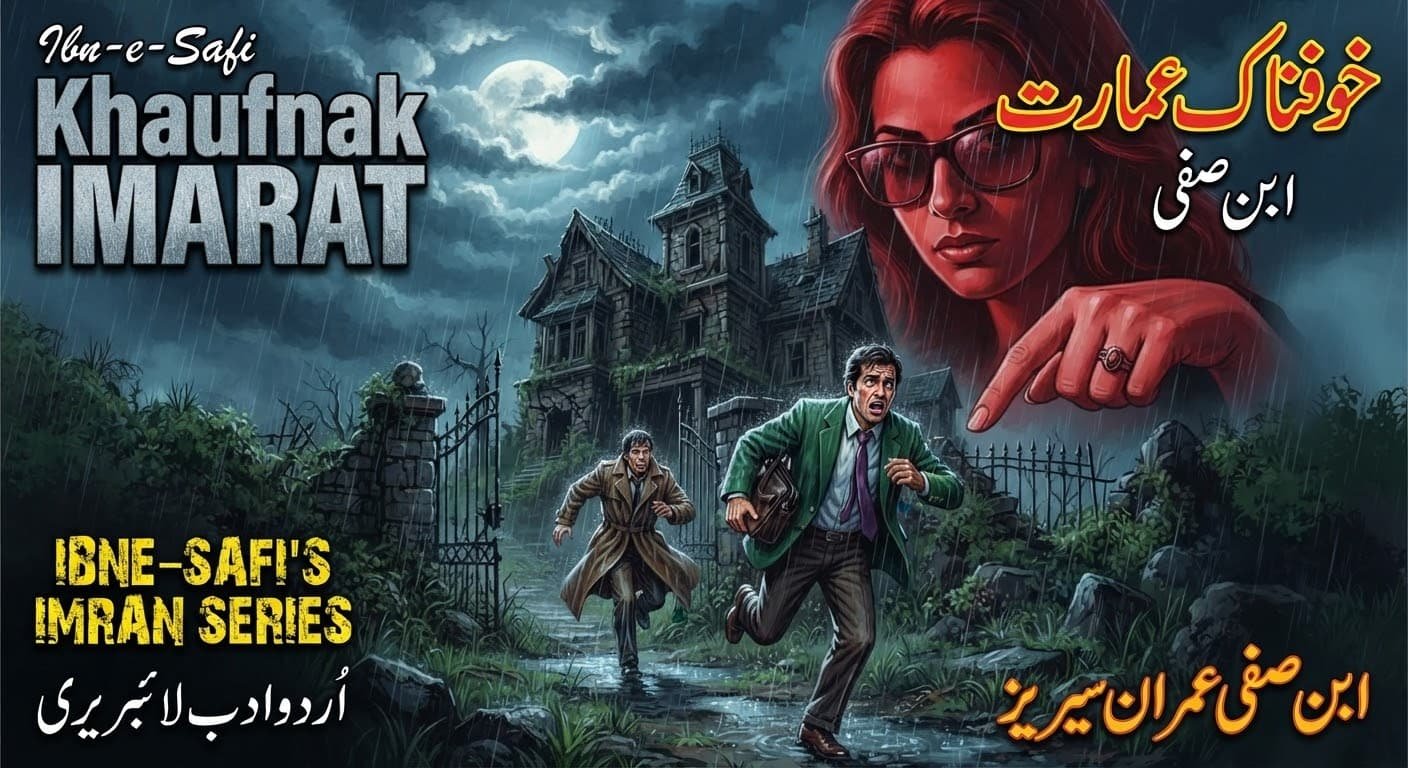
Khaufnaak Imarat by Ibn-e-Safi
The Empty House That Introduced Ali Imran
Novel at a Glance | ناول کی تفصیل
- • Title | نام: Khaufnaak Imarat | خوفناک عمارت (The House of Fear / The Terrifying Building)
- • Author | مصنف: Ibn-e-Safi (Asrar Ahmad) | ابن صفی (اسرار احمد)
- • Series | سیریز: Imran Series, No. 1 | عمران سیریز، نمبر 1
- • First published | پہلی اشاعت: 1955 (August or October; see below | اگست یا اکتوبر، تفصیل نیچے)
- • Length | ضخامت: about 60–80 pages in early editions (Goodreads listings) | ابتدائی ایڈیشن تقریباً 60 سے 80 صفحات
- • English translation | انگریزی ترجمہ: The House of Fear, Bilal Tanweer, Random House India, 2010 (with the second Imran novel)
ایسا جاسوس جو جاسوس نظر آنا نہیں چاہتا
پچاس کی دہائی کے وسط تک اردو قاری جاسوس کو ایک سنجیدہ، منظم اور ذرا خشک شخصیت کے طور پر جانتا تھا۔ ابن صفی جاسوسی دنیا میں کرنل فریدی اور کیپٹن حمید کے ذریعے اس سانچے میں نرمی لا چکے تھے۔ 1955ء میں انہوں نے ایک قدم اور بڑھایا اور ایسا معمہ لکھا جس کا تفتیش کار بیشتر وقت تفتیش کرتا دکھائی ہی نہیں دیتا۔ خوفناک عمارت کی اصل اہمیت یہی خاموش جسارت ہے۔
A Detective Who Would Rather Not Look Like One
By the mid-1950s, Urdu readers knew the detective as a sober figure: disciplined, composed, a little humourless. Ibn-e-Safi had already softened that mould in Jasoosi Duniya, where Colonel Faridi and Captain Hameed traded banter between cases. In 1955 he went further and wrote a mystery whose investigator seems, for much of the time, not to be investigating at all. That quiet provocation is what makes Khaufnaak Imarat worth reading beyond its plot.
نام، سیریز اور اشاعت
خوفناک» یعنی خوف پیدا کرنے والی اور «عمارت» یعنی مکان، اس لیے انگریزی میں اسے The Terrifying Building اور 2010ء کے ایڈیشن میں The House of Fear کہا گیا۔ «امارت» جیسی املا محض فرق ہے، الگ کتاب نہیں۔ یہ عمران سیریز کا پہلا نمبر ہے جو 1980ء تک چلتی رہی؛ ذرائع کے مطابق اس کے ناول 120 سے 122 کے درمیان ہیں۔ جاسوسی دنیا مارچ 1952ء میں شروع ہو چکی تھی اور ساتھ ساتھ چلتی رہی۔
سال 1955ء پر تقریباً سب متفق ہیں، مہینے پر نہیں۔ گُڈ ریڈز، ویکیپیڈیا اور دی نیوز کی رپورٹ اکتوبر 1955ء بتاتے ہیں، جبکہ بزنس ریکارڈر کے مطابق پاکستان میں اگست 1955ء اور بھارتی ایڈیشن نومبر میں آیا۔ ممکن ہے یہ مختلف طباعتوں کی تاریخیں ہوں، اس لیے محتاط بات یہ ہے کہ ناول 1955ء میں، غالباً اگست سے اکتوبر کے درمیان شائع ہوا اور نومبر تک بھارتی ایڈیشن بھی آ گیا۔ ایک گُڈ ریڈز اندراج کے مطابق ناشر اسرار پبلی کیشنز تھا، یعنی ان کا اپنا کراچی کا ادارہ۔
Title, Series and Publication
Khaufnaak means fear-inspiring and imarat means building, so the title is literally “The Terrifying Building”; the 2010 English edition calls it The House of Fear. Spellings such as Imaarat are only variants. It is numbered first in the Imran Series, which Ibn-e-Safi continued until 1980 (about 120 titles; sources give 120–122). Jasoosi Duniya had begun earlier, in March 1952, and ran alongside it.
The year 1955 is consistent across sources; the month is not. Goodreads, Wikipedia and a report in The News say October 1955. Business Recorder says August 1955 in Pakistan, with the Indian edition in November. These may describe different printings, so the careful statement is: first published in 1955, probably between August and October, with an Indian edition by November. One Goodreads listing names Asrar Publications, his own Karachi house, as publisher.
ابن صفی: اسرار احمد کا ادبی سفر
ابن صفی کا اصل نام اسرار احمد تھا۔ وہ 26 جولائی 1928ء کو ضلع الٰہ آباد کے قصبے نارہ میں پیدا ہوئے۔ قلمی نام والد صفی اللہ کی نسبت سے ہے۔ جاسوسی ناول سے پہلے وہ شاعری اور طنز و مزاح لکھتے تھے، اور یہ بات اہم ہے کیونکہ عمران کے مکالموں کی لفظی بازی کوئی اچانک ایجاد نہیں تھی بلکہ پرانی مشق کا نتیجہ تھی۔ تعلیم کی تفصیلات ذرائع میں مختلف ہیں، اس لیے ibnesafi.info سے تصدیق کر لیں۔
جاسوسی دنیا کے آغاز کی مشہور روایت یہ ہے کہ انہیں ثابت کرنا تھا کہ اردو قاری سستی سنسنی کے بغیر بھی پلاٹ، تجسس اور مزاح سے جڑا رہ سکتا ہے۔ روایت میں کچھ سجاوٹ ہو سکتی ہے، مگر ان کی کتابیں اس کی تصدیق کرتی ہیں۔ جاسوسی دنیا مارچ 1952ء میں الٰہ آباد سے شروع ہوئی۔
ہجرت کے بارے میں مآخذ مختلف ہیں۔ ڈان کے مطابق وہ اگست 1952ء میں پاکستان آئے، جبکہ ویکیپیڈیا کے مطابق 1953ء میں والدہ اور بہن کے ساتھ کراچی منتقل ہوئے جہاں والد 1947ء میں پہنچ چکے تھے۔ بہرحال کراچی ان کی تحریر اور اشاعت کا مرکز بنا اور عمران سیریز وہیں شروع ہوئی۔ دونوں سلسلوں کے ناول مل کر تقریباً 245 بنتے ہیں۔ 1960ء سے 1963ء کے قریب طویل بیماری نے انہیں لکھنے سے روکا اور نقل نویسوں نے ان کے نام پر کمزور ناول چھاپے۔ وہ 26 جولائی 1980ء کو 52 سال کی عمر میں کراچی میں فوت ہوئے؛ بزنس ریکارڈر کے مطابق عمران سیریز کا ادھورا ناول «آخری آدمی» ان کے سرہانے تھا۔ بھارت اور پاکستان میں آج بھی کئی جگہوں کے نام ان کے ناولوں سے لیے گئے ہیں، اور جاوید اختر نے بڑے قد کے کردار بنانے کا سبق ان سے سیکھنے کا ذکر کیا ہے۔
The Writer: Asrar Ahmad, Ibn-e-Safi
Ibn-e-Safi
Ibn-e-Safi was the pen name of Asrar Ahmad, born on 26 July 1928 in Nara, Allahabad district; the name means “son of Safi”, after his father Safiullah. Before detective fiction he wrote poetry and humorous prose, and that apprenticeship matters: Imran’s wordplay was a skill practised elsewhere first. Biographical accounts (verify against the family site ibnesafi.info) describe an Allahabad education.
The well-known story of Jasoosi Duniya is that he set out to show Urdu readers could be held by plot, suspense and humour alone, without cheap sensation. Whatever polish the anecdote has gained, the books bear it out. Jasoosi Duniya began in March 1952 from Allahabad.
Sources differ on migration. Dawn says he reached Pakistan in August 1952; Wikipedia says he moved to Karachi in 1953 with his mother and sister, joining his father, who had come in 1947. Either way, Karachi became the base of his writing and publishing, and the Imran Series began there. Together his two series run to roughly 245 novels. A long illness around 1960–1963 interrupted his writing, and imitators filled the gap with spurious novels. He died in Karachi on 26 July 1980, aged 52, and Business Recorder notes an unfinished Imran novel, Aakhri Aadmi, was by his bedside. Places in India and Pakistan still carry names taken from his novels, and Javed Akhtar has credited them with teaching him the value of larger-than-life characters.
کہانی، انجام کے بغیر
مرکز شہر کے نواح میں ایک ویران مکان ہے جہاں ہلاکتوں کا سلسلہ ملتا ہے؛ ہر مقتول پر تین چاقو کے زخم پائے جاتے ہیں، جس سے ایک جرم ایک پیٹرن بن جاتا ہے۔ ترجمے پر ایک بھارتی تبصرے کے مطابق مکان فیاض کے پڑوسی جج صاحب کی ملکیت ہے، اسی تعلق سے فیاض معاملے میں آتا ہے اور کیس عمران تک پہنچتا ہے۔ دیکھیں کہ کہانی جاسوس کے دفتر سے نہیں، ایک محلے سے شروع ہوتی ہے جو ایک عمارت کی وجہ سے بے چین ہے۔
جو خلاصے اس ناول کو دوسرے ناول «چٹانوں میں فائر» سے ملا دیتے ہیں ان سے ہوشیار رہیں؛ کرنل زرغام، لکڑی کے جانوروں کے کھلونے اور لی یو کا اسی دوسرے ناول کا حصہ ہیں۔ اس مضمون میں کوئی منظر، مکالمہ یا حل خود نہیں گھڑا گیا۔
The Story, Without the Ending
The setting is an empty house on the outskirts of a city with a record of death: victims are found there, each with three knife wounds, which turns a single crime into a pattern. According to an Indian review of the translation, the house belongs to Judge Sahab, the neighbour of Fayyaz, and that connection draws Fayyaz in and sends the case to Imran. Note the route: the story starts with a neighbourhood unsettled by a building, not with a detective at his desk.
Beware summaries that blend the first novel with the second, Chattanon Mein Fire; Colonel Zargham, the wooden animal toys and Li Yu Ka belong to that second book. This article avoids inventing scenes, dialogue or the solution.
علی عمران: بے وقوفی بطور طریقہ
ترجمے کے تبصروں میں عمران کو ایم ایس سی، پی ایچ ڈی بتایا گیا ہے، اور اس کے برتاؤ سے تضاد ہی مزاح ہے۔ ویکیپیڈیا کے مطابق اس کی پہلی نمود اگست 1955ء ہے۔ بعد میں خفیہ ادارے کا سربراہ ایکس ٹو ہونا سیریز کے ارتقا کا حصہ ہے، اسے اس پہلے ناول میں شامل نہ سمجھا جائے۔ پہلا ناول ایک طریقہ قائم کرتا ہے: تبصرہ نگار پلاٹ کو کمزور مگر عمران کی ذہین باتوں کو اصل طاقت قرار دیتے ہیں، اور ڈان کا مبصر لکھتا ہے کہ اس کی حرکتیں بکھری ہوئی کہانی میں دلچسپی قائم رکھتی ہیں۔ وہ سوال کے جواب میں سوال کرتا ہے اور دوسروں کو خود کو کم تر سمجھنے دیتا ہے؛ یہی بے سمتی معلومات نکلوانے کا ذریعہ بھی ہے۔ کلاسیکی جاسوس کی پہچان سکون ہے، عمران کی پہچان ٹال مٹول، اور اسی سے مصنف ایک ہی پیراگراف میں مزاح اور سنسنی لکھ سکتا ہے۔
Ali Imran: Foolishness as Method
Reviews of the translation present Imran as “MSc, PhD”, and the contrast with his manner is the joke. Wikipedia dates his first appearance to August 1955. His later role as secret-service chief X-2 belongs to the series’ development, so it should not be read back into this novel. What the first book establishes is a method. Reviewers call the plot thin but single out Imran’s smart talk; Dawn’s reviewer says his antics sustain interest through meandering storylines. He answers questions with questions and lets people underestimate him, and that disorientation is also how he draws out information. The classic detective is defined by composure; Imran is defined by deflection, which lets the author write comedy and suspense in one paragraph.
اسلوب، تجسس اور اہمیت
مکان مختصر ناول کو ایک محدود مرکز دیتا ہے۔ ابن صفی کی نثر تیز اور سادہ ہے، پرانی آرائشی داستانی زبان کے بجائے شہر کی بول چال کے قریب، اور معلومات مکالمے کے ذریعے آگے بڑھتی ہیں۔ فقرے بازی اور جان بوجھ کر غلط سمجھنا مکالمے میں دوسری تہہ بناتے ہیں، اسی لیے انگریزی میں یہ مزاح کمزور پڑتا ہے۔
یہ ناول اردو جاسوسی ادب کا بانی نہیں، کیونکہ جاسوسی دنیا پہلے آ چکی تھی۔ اس کی اہمیت یہ ہے کہ اس سے پچیس سال چلنے والا سلسلہ اور ایسا ہیرو شروع ہوا جو جاسوس کے رعب کو پہن کر نہیں بلکہ ادا کر کے دکھاتا ہے۔ چند مہینوں میں بھارتی ایڈیشن کا آنا نئی سرحد کے آر پار قارئین کی نشاندہی کرتا ہے۔
Style, Suspense and Significance
The house gives a short novel a bounded centre. Ibn-e-Safi’s prose is brisk and plain, closer to the spoken city than to ornate romance, and dialogue carries information. Puns and deliberate misunderstandings form a second layer, which is why Dawn’s reviewer finds them weaker in English.
The novel did not found Urdu detective fiction, since Jasoosi Duniya came first. Its importance is that it launched a quarter-century series and a protagonist who treats a detective’s authority as something to perform. Its Indian edition appearing within months suggests a readership across the new border.
متوازن جائزہ
یہ مضمون ذاتی مطالعے کا دعویٰ نہیں کرتا، شائع شدہ تبصروں اور اندراجات پر مبنی ہے۔ قارئین مزاح اور رفتار کو سراہتے ہیں؛ نقاد کمزور پلاٹ (ڈی این اے)، اچانک انجام (نیوز لائن) اور محدود کردار نگاری کا ذکر کرتے ہیں۔ آج کا قاری اسے مختصر، نفسیات میں ہلکا اور لفظی بازی پر منحصر پائے گا۔ اسے ایک طویل سلسلے کے پہلے قدم کے طور پر پڑھنا زیادہ مناسب ہے۔
A Balanced Reading
This article claims no personal reading and relies on published reviews and records. Readers praise the humour and pace; critics note a thin plot (DNA), abrupt climaxes (Newsline) and limited character depth. Modern readers may find it short, light on psychology and dependent on wordplay that translation weakens. Read it as the first step of a long series rather than a finished masterpiece.
قارئین کے سوالات
مصنف کون ہے؟ ابن صفی (اسرار احمد، 1928ء تا 1980ء)۔ کیا یہ عمران سیریز کا پہلا ناول ہے؟ جی ہاں؛ دوسرا «چٹانوں میں فائر» ہے۔ کب شائع ہوا؟ 1955ء میں؛ مہینہ اگست یا اکتوبر بتایا جاتا ہے۔ کیا انگریزی ترجمہ ہے؟ جی ہاں، The House of Fear (2010ء)، مترجم بلال تنویر۔ کیا پہلے جاسوسی دنیا پڑھنا ضروری ہے؟ نہیں، سیریز الگ پڑھی جا سکتی ہے۔
FAQ
Who wrote it? Ibn-e-Safi (Asrar Ahmad, 1928–1980). Is it the first Imran novel? Yes; the second is Chattanon Mein Fire. When was it published? 1955; sources say August or October. Is there an English translation? Yes, The House of Fear (2010), translated by Bilal Tanweer. Do I need Jasoosi Duniya first? No; the series stands alone.
اختتام
ایک ایسا مکان جہاں کوئی جانا نہیں چاہتا، ایک ایسے جاسوس کا اسٹیج بنتا ہے جسے کوئی سنجیدہ نہیں لیتا۔ یہ ابن صفی کا سب سے پیچیدہ ناول نہیں، مگر ایک نئی آواز کی پہلی گونج ہے، اور اسی آواز نے سو سے زیادہ کتابیں سہار لیں۔
An Eccentric and the Building That Brought Him In
A house nobody wishes to enter becomes the stage for a detective nobody takes seriously. The novel is not Ibn-e-Safi’s most intricate, but it is the first sound of a new voice, and that voice sustained a hundred more books.